Flagship Therapy

Counselling through story, character and role-play

Nat 1 Therapy provides a unique solution to therapy, TTRPG Therapy. It has no boundaries, accepting individuals for who they choose to be and whatever they choose to do. Confront life's challenges and obstacles how you choose, as whoever you choose: Uthrak the Barbarian, the strongest half-orc in all of the northern lands. Nabuli, a goddess born from poverty climbing through the ranks of the patriarchal star systems. Cram, a genetically enhanced android who the nobles all said would never be more than a servant, now they beg them for provisions.
TTRPG Therapy

What is a TTRPG?

TTRPG stands for Table Top Role Play Games. The most popular is Dungeons and Dragons but there are a countless number of other TTRPGs, Pathfinder, Vampire: The Masquerade, Starfinder, Aliens, Star Wars and Fallout. Take any idea of a fantasy world from crawling through caves or navigating a starship through the nebulas of space, and there's a game system out there to navigate around it. They all have a similar format, grab a rule book, some dice, create a character suitable for the fitting, some friends to play with and a host. The host is often referred to as a dungeon master (DM) or a games master (GM). They set the scene and you as the player(s), decide how to navigate through the world, and it's non-playable characters (NPCs). These NPCs are controlled by the GM and they may help, hinder or harm the character. The aim of the game is to have fun, have interesting experiences and possibly complete an ultimate goal. The goal is usually to defeat a 'big bad', save the world, complete an ultimate objective, be the ultimate hero (or villain), or settle down in a place of your own after the adventure is over.
Why TTPRGs?

Where do TTRPGs come into therapy?

TTRPG Therapy is practiced by only a handful of therapists in the UK, and by many more in America. The benefits of TTRPG or role-play therapy is well documented and utilised from as early as the 1920s. Its primary use has been focused on working with children but I witnessed first hand how powerful it can be when working with adults. In this case, the client adventures in a solo campaign, working one-to-one with the therapist to face challenges and overcome obstacles in a safe and indirect way. It can be a more neuro affirming and accepting approach to therapy than traditional therapies.

The Beginning

Where to start?

Contracting, boundary setting, presenting issues. Much like traditional therapy, a safe space is created for the client. Presenting issues are discussed, boundaries are created and the character is created, either by the client or cooperatively with the therapist.

The Adventure Begins!

Setting the scene

The adventure is planned out. Again this is by done either by the client, the counsellor or cooperatively depending on the client's wishes.

Progression

Navigation

The character navigates through the world, facing off against challenges, solving problems and meeting new people along the way. The pace is dictated by the client, how they face challenges, who they wish to interact with and when to return home to the safe space of a homestead, cavern or spaceship at any time.

Every Campaign is Unique

Your quest for your character

No two sessions will be the same, each session is molded around both the player (client) and the character. Each experience is a one of a kind and there's always space to explore, or perhaps rewind and face a challenge in a different way.

Making the Choice

Is TTRPG right for you?

If you are a fan of TTRPGs, comics, board or computer games, Nat 1's TTRPG Therapy may be be the perfect fit for you as an alternative therapy. If not, the switch to traditional therapy is an easy and simple one. Therapy should work for you, and what works for each individual is exactly that: individual.

Rurza the Dragonborne

A DM and a players experience

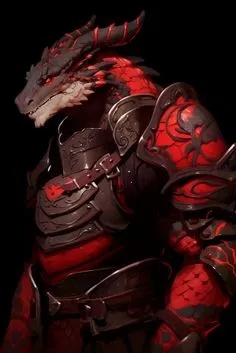
This is the experience of both myself as a DM and my a player, and the inspiration to create my version of TTRPG therapy. This story comes with a warning as it may be triggering. I ran a Dungeons and Dragons campaign that lasted nearly 2 years. During that time there was a Red Dragonborn, Rurza. His father (Toge) had abandoned him and his stepfather (Adam) was killed by the very people he protected. As the campaign went on, Rurza only spoke to Adam when he should have died, when he was in a place between worlds. He asked for guidance and received support and encouragement. Rurza spoke to him one last time as the connection between the worlds faded; “I love you, I miss you and I don’t know how to do this without you”. Toge was the “big bad”, the leader of the army threatening to destroy Rurza and all those he cared for. He was everything Rurza was not, cruel and unforgiving, someone who didn’t care for anyone but themselves. In the end, Toge killed Rurza with his own sword before falling to the rest of the party and he met Adam once more who placed his arm around Rurza and they both walked into the light. So why did I share that story? In reality, Rurza was not just a character, he was the player as he wanted to be. Adam and Toge were both aspects of his own Father. After the player’s Father died, he told me that he laughed to himself as he spread his ashes as the thought that went through his head was “I love you, I miss you and I’m figuring out how to do this without you”.
Sometimes a different approach can change a Natural 1 to a Natural 20